Why Is Volcanic Water Naturally Rich in Minerals? Understanding the Science Behind It

Water may look simple in a glass, but its journey before reaching that glass can be remarkably complex. Depending on where water originates and the geological formations it travels through, it can develop a distinctive mineral composition, taste, and character.
This is particularly interesting in volcanic regions. As rainwater gradually moves underground and passes through layers of mineral-rich volcanic rock, it interacts with the surrounding geology. Over time, this process can contribute naturally occurring minerals to the water.
Understanding Volcanic Water Minerals therefore begins not with the bottle, but deep beneath the Earth's surface.
The Natural Mineral Journey of Volcanic Water
When rain falls over a volcanic landscape, some of it flows across the surface, while some seeps into the ground. The water that travels underground can move through cracks, pores, and spaces within different layers of rock before eventually collecting in underground aquifers.
In volcanic regions, these formations commonly include basalt a volcanic rock formed when lava cools and solidifies.
Rather than simply travelling through the rock, water interacts with it along the way. As it moves slowly through these geological layers, small amounts of naturally occurring mineral components can dissolve into the water.
This combination of movement, contact with rock, and time creates a process of geological filtration and natural mineral enrichment.
The result is water whose mineral profile reflects, to some extent, the geology through which it has travelled.
How Do Volcanic Rocks Enrich Water with Minerals?
Volcanic rocks contain a variety of mineral-forming elements. Basalt, in particular, contains compounds associated with minerals such as calcium and magnesium, among others.
As water percolates through porous basalt and other underground formations, continuous contact between the water and rock allows certain soluble components to enter the water naturally.
It is important to distinguish this from minerals being artificially added after collection. In naturally mineralised volcanic water, the interaction takes place underground as part of the water's geological journey.
The process does not happen instantly. The composition ultimately found in the water can depend on several natural factors, including the type of rock, the chemistry of the water, the path it follows underground, and how long the water remains in contact with geological formations.
That is one reason volcanic waters originating from different regions do not necessarily have identical mineral profiles.
What Minerals Can Be Found in Volcanic Water?
The exact Minerals in Volcanic Water vary according to the source and surrounding geology. However, mineral waters associated with volcanic and basaltic formations can contain naturally occurring minerals and elements such as calcium, magnesium, potassium, and silica.
Each becomes part of the water's overall mineral composition:
- Calcium can occur naturally as water interacts with calcium-containing rocks and minerals.
- Magnesium is another component commonly associated with mineral-rich geological formations, including basalt.
- Potassium may be present in smaller quantities as part of the water's naturally developed mineral profile.
- Silica originates from interactions with silicon-containing rocks and is often associated with waters that have spent time moving through volcanic formations.
What matters is not simply whether these individual components are present. Together, their concentrations and proportions contribute to the particular mineral identity of a water source.
Quick Insight: Did you know volcanic rock natural filtration changes the water structure completely?
Read Full Comparison: Volcanic Still Water Different from Ordinary Water?
Why Does the Mineral Profile Matter?
Two glasses of water can appear identical and still taste noticeably different. One reason is their dissolved mineral composition.
Minerals can influence several sensory characteristics of water, including its taste, mouthfeel, and finish. Depending on the source and mineral balance, water may taste crisp, soft, rounded, clean, or more distinctly mineral.
This is why assessing mineral water is not simply a question of asking, "How many minerals does it contain?"
More does not automatically mean better.
The balance of minerals is an important part of the water's overall character. Different proportions of naturally occurring minerals can create different sensory experiences, just as waters from different geological regions can have recognisably different profiles.
For premium natural mineral water, provenance and composition therefore become closely connected. The geology is not merely part of the story surrounding the water—it helps shape what eventually reaches the bottle.
From Underground Aquifer to Volcanic Water Bottle
By the time volcanic water is packaged, much of what defines its natural character has already happened underground.
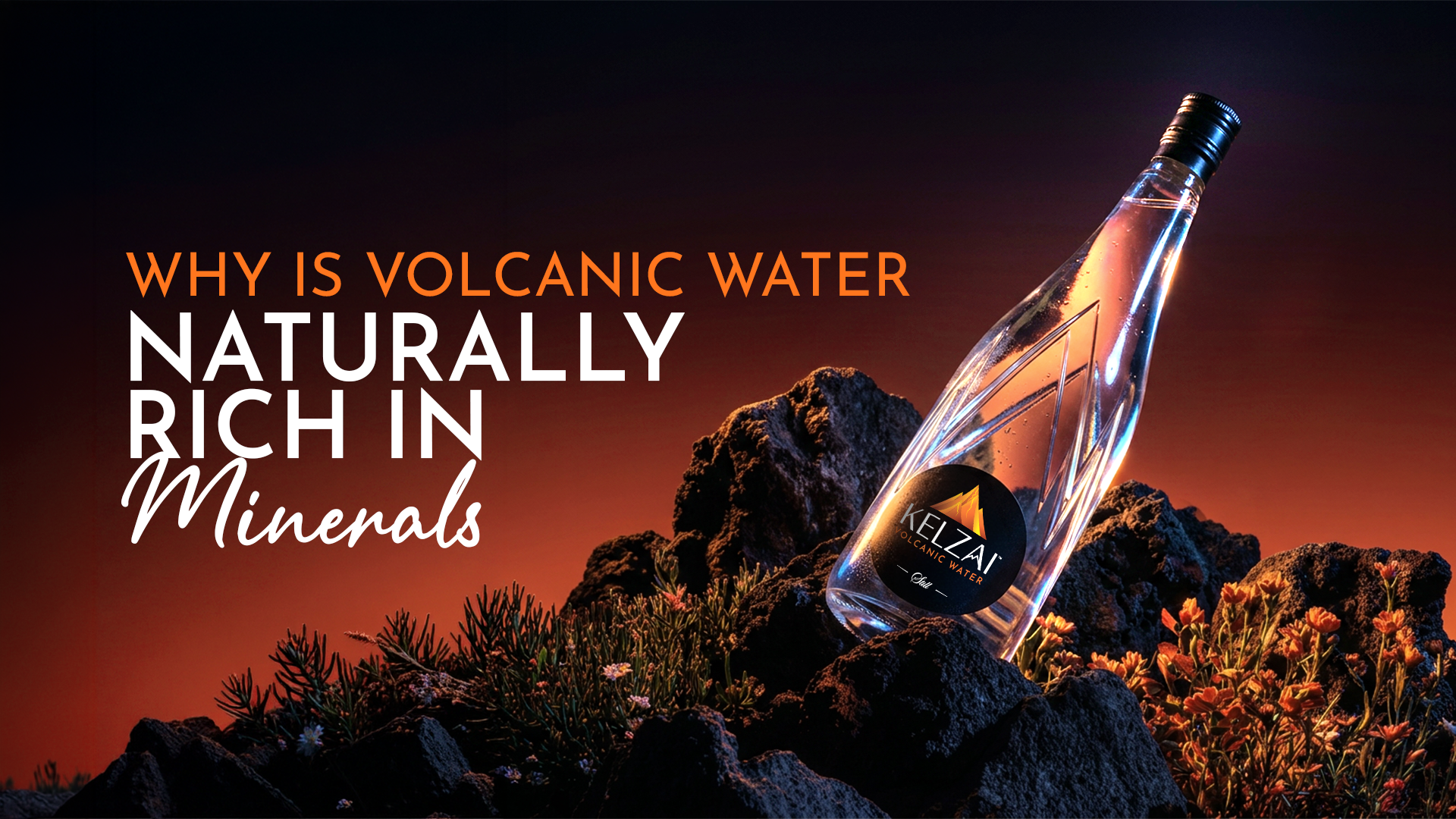
The source, rock formations, aquifer, and natural filtration journey precede the Volcanic Water bottle seen on a dining table or retail shelf. Packaging presents the finished product, but the distinctive mineral profile begins much earlier within the landscape itself.
This distinction is especially relevant when considering premium mineral waters. Their character is connected to a particular source rather than being created solely through processing or packaging.
For consumers exploring Natural Mineral Water India options, understanding the source provides useful context. India contains highly diverse geological regions, and the Sahyadri range in western India is particularly significant for its extensive volcanic basalt formations.
Kelzai and the Volcanic Formations of the Sahyadri
The geological relationship between basalt and water is central to the story of Kelzai Volcanic Water.
Kelzai is sourced from volcanic aquifers associated with the Sahyadri Mountains. The region contains extensive basalt formations created by ancient volcanic activity. Rainwater percolating through these porous rock layers undergoes natural filtration before collecting in underground aquifers.
According to Kelzai, fresh rainwater passes through thousands of feet of porous basalt formations, with this journey naturally enriching the water with minerals. This volcanic source is therefore more than a branding detail—it is fundamental to the character and positioning of the water.
Kelzai offers its volcanic water in still and sparkling variants, including glass bottle formats, allowing the naturally developed mineral character of the source to form the foundation of the drinking experience.
Geology You Can Experience in a Glass
The science behind Volcanic Water Minerals comes down to a natural relationship between water, rock, and time.
Rainwater enters the ground, travels through layers of volcanic formations, interacts with mineral-containing rock, and eventually collects within underground aquifers. During that journey, geological filtration and water-rock interaction help develop its natural mineral profile.
Calcium, magnesium, potassium, silica, and other naturally occurring components can collectively influence the taste, mouthfeel, and overall character of the water. Importantly, it is the balance of this composition not simply the presence of individual minerals that helps distinguish one natural mineral water from another.
For Kelzai, the volcanic formations of the Sahyadri provide this geological foundation. Long before a bottle reaches the table, nature has already played the defining role allowing water, basalt, and time to shape its distinctive mineral character.